Paris has several thousand bakeries, and you are rarely far from an oven filling the street with the smell of fresh bread. Quality varies enormously from one address to another though, between industrial chains and genuine artisans who knead, shape and bake their bread on site. Learning to tell the two apart, and knowing which specialties are worth seeking out, changes the way you eat your way through the city.
How to spot a genuine artisanal boulangerie
In France the word "boulangerie" is legally protected: to use it, a shop must knead, shape and bake its bread on the premises, without relying on frozen, pre-baked dough. In practice, a sign reading "boulangerie artisanale," a line of regulars at peak hours and the smell of warm bread right at the door are all good signs. Do not hesitate to ask whether the bread is baked on site, most artisans are happy to answer.
The baguette tradition and the Grand Prix de la Baguette de Paris
Every year a municipal competition, the Grand Prix de la Baguette de Paris, crowns the best "baguette tradition" in the capital, judged on baking, crumb texture, crust and flavor. The winning bakery earns a well-deserved spotlight, and the honor of supplying bread to the Élysée Palace for a year. The contest is a good reminder of just how seriously the French take their baguette, far from being an ordinary daily staple.
Viennoiseries worth trying beyond the croissant
Pain au chocolat (or chocolatine, depending on where in France the speaker grew up, a debate that still livens up bakery counters) remains an essential classic, but it is far from the only option. Kouign-amann, a caramelized, flaky Breton specialty, and financier, a small almond sponge cake, both deserve attention in a good bakery. Many shops also offer more personal, often limited-edition creations that are worth trying on the spot.
Visiting a neighborhood market to find local favorites
Local food markets are an excellent starting point for finding the bakeries residents actually rely on, often mentioned in passing by nearby stallholders or by other customers waiting in line. It is also a good chance to notice which bakery stalls or nearby shops sell out by late morning, a reliable sign of small daily batches rather than mass production. Following a neighborhood's own habits is usually more useful than any fixed list of addresses.
The best time to go for a fresh, still-warm baguette
Most Parisian bakeries bake several batches a day, typically an early morning service and often a second one in late afternoon. Visiting outside the lunchtime rush improves the odds of catching bread straight out of the oven. Some shops even post their baking times in the window, worth checking if a warm baguette matters to you.
Le Marais, a good starting point for a bakery-hopping stroll
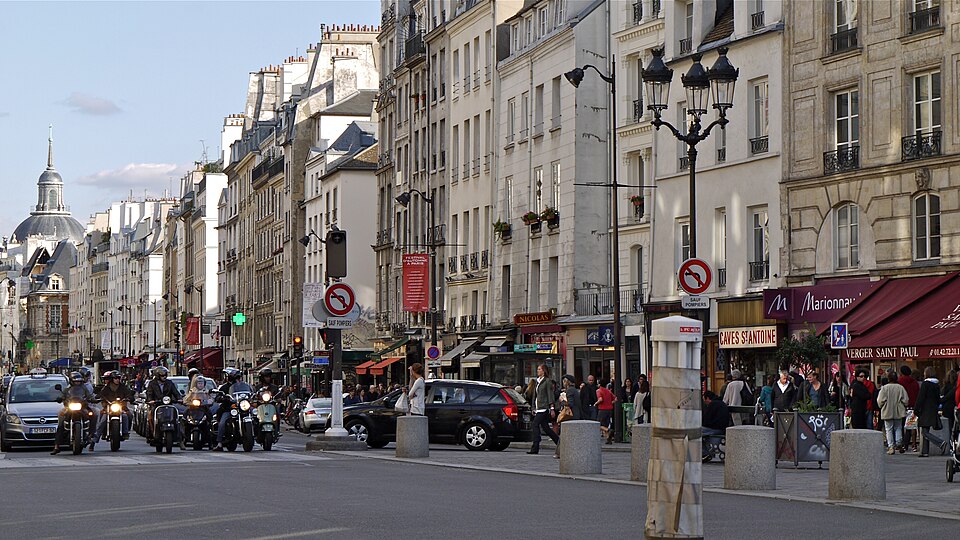
The Marais district, with lively shopping streets like Rue Saint-Antoine, has a strong concentration of quality bakeries, mixing long-established houses with younger artisans who set up more recently. It makes an ideal neighborhood for a food-focused walk, alternating between traditional pastries and more creative offerings. Other neighborhoods such as Canal Saint-Martin or the 11th arrondissement reward the same kind of exploring.
Tips
For a baguette at its best, eat it within an hour of buying it, traditional Parisian bread has no preservatives and loses its texture quickly. If a bakery has a long line on a Sunday morning, treat it as a good sign rather than a reason to walk on. Many bakeries close one day a week, often on Mondays, and some cut back their hours in August, a traditional vacation month for many Parisian shopkeepers, so it helps to have a backup address in mind in case the shutters are down. Keep in mind too that the best bakeries are not always the most famous ones, artisans tucked away on side streets, far from the main tourist routes, often charge fairer prices for bread that is every bit as good, if not better.