Beneath the sidewalks and the Haussmann-era buildings, Paris hides an entirely different world: former limestone quarries turned into an ossuary, a sewer network over a century old, the remains of a Roman amphitheater and even an abandoned railway line reclaimed by plants. This side of Paris can be visited too, as long as you stick to the routes that are marked and open to the public. Here is a tour of these underground or forgotten sites, beyond the well-known Catacombs entrance.
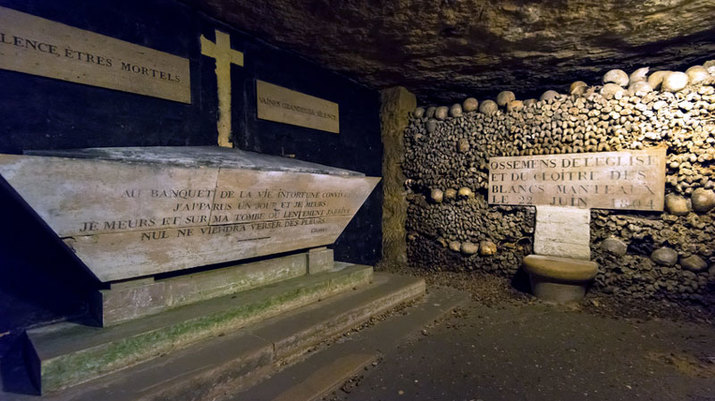
The Catacombs' ossuary corridor
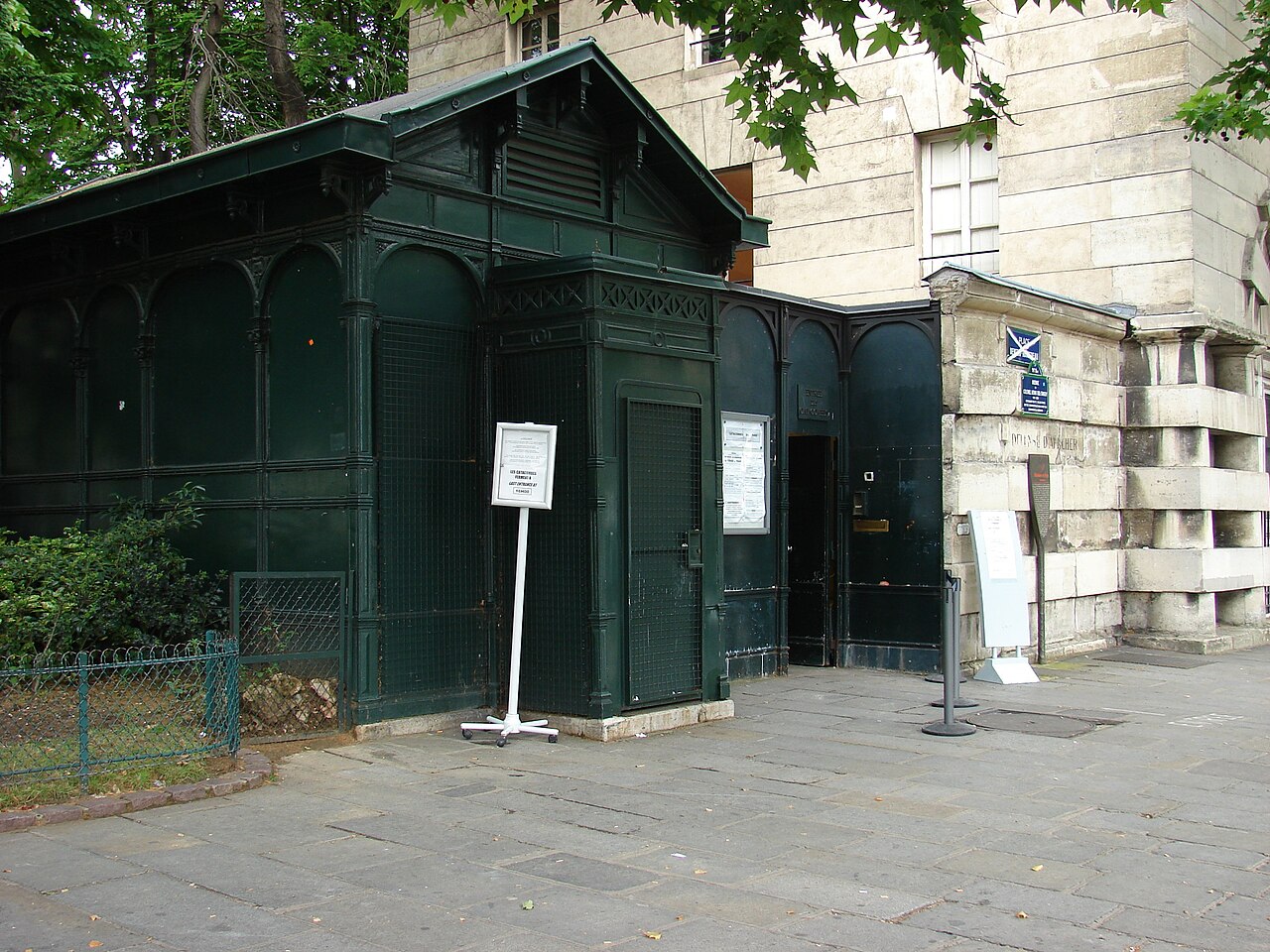
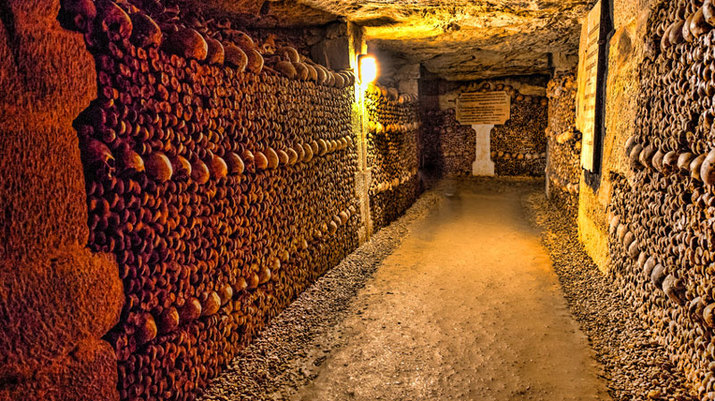
The public route through the Catacombs runs for about two kilometers of galleries lined with carefully stacked femurs and skulls, holding the remains of roughly six million Parisians moved there at the end of the eighteenth century. The descent takes visitors about twenty meters underground, into a cool temperature that stays constant year round.
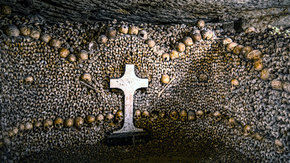
The former limestone quarries
These galleries were not originally dug to hold human remains, they come from the quarries that supplied the stone used to build a large part of Paris. Inscriptions and carvings left by quarry workers still punctuate parts of the route, quiet traces of this vanished mining activity.
The Paris Sewer Museum
Housed on the banks of the Seine, this museum lets visitors walk through an actual section of the Paris sewer network, complete with vaulted galleries, street signs that mirror those above ground, and original pipework. It is this same network, immortalized by Victor Hugo in Les Misérables, that has long served as a hiding place in literature and film.
The Arènes de Lutèce
These remains of a Gallo-Roman amphitheater, partly buried and later rediscovered in the nineteenth century, are a reminder that Paris was once called Lutetia. Today laid out as a small, free public square in the 5th arrondissement, they still double as a pétanque court and informal playground for local residents.
The Petite Ceinture
This former railway line, which once circled Paris just inside its edge, stopped carrying passengers more than a century ago. Several stretches have since been turned into planted walkways where vegetation has taken over, making for an unusual stroll far from traffic, somewhere between urban wasteland and rewilded nature.
A safety note worth knowing
The public route open in the Catacombs is only a tiny fraction of a network of galleries that stretches for hundreds of kilometers under several arrondissements. Venturing beyond the authorized sections, a practice sometimes called cataphile exploration, is strictly illegal and dangerous: risk of collapse, no landmarks or phone signal, and fines if caught. These lesser-known galleries are best left to official, guided visits.
Tips
The Catacombs can only be visited with a ticket booked online in advance, as demand stays very high year round; allow about an hour for the visit, with several hundred steps to climb down and back up, and no elevator or access for visitors with reduced mobility. The Sewer Museum and the Arènes de Lutèce both take much less time and pair well with a walk through the Latin Quarter or along the Seine. For the Petite Ceinture, stick to the stretches that are officially open to the public, notably in the 15th and 20th arrondissements, rather than the fenced-off sections. Wear comfortable shoes, and for the Catacombs bring a warm layer even in summer, since the temperature underground stays cool all year.